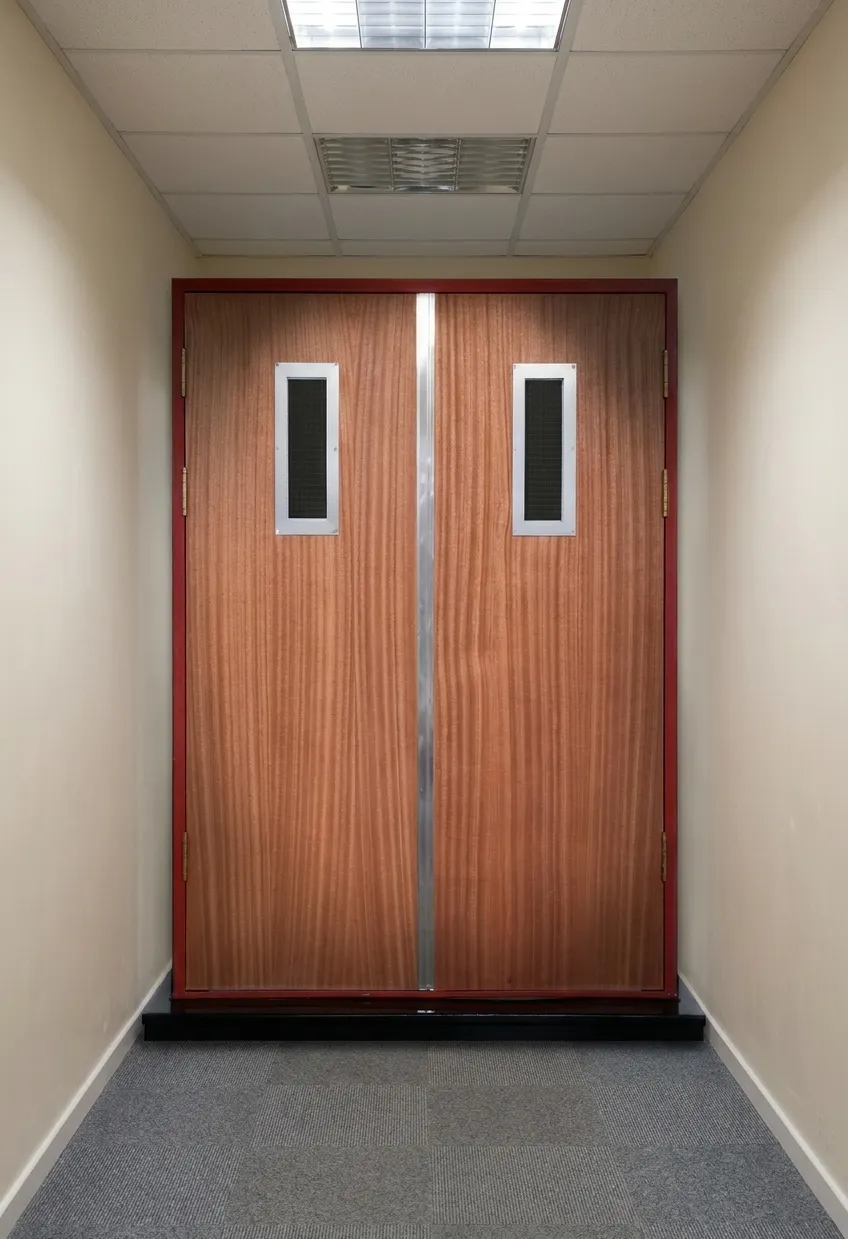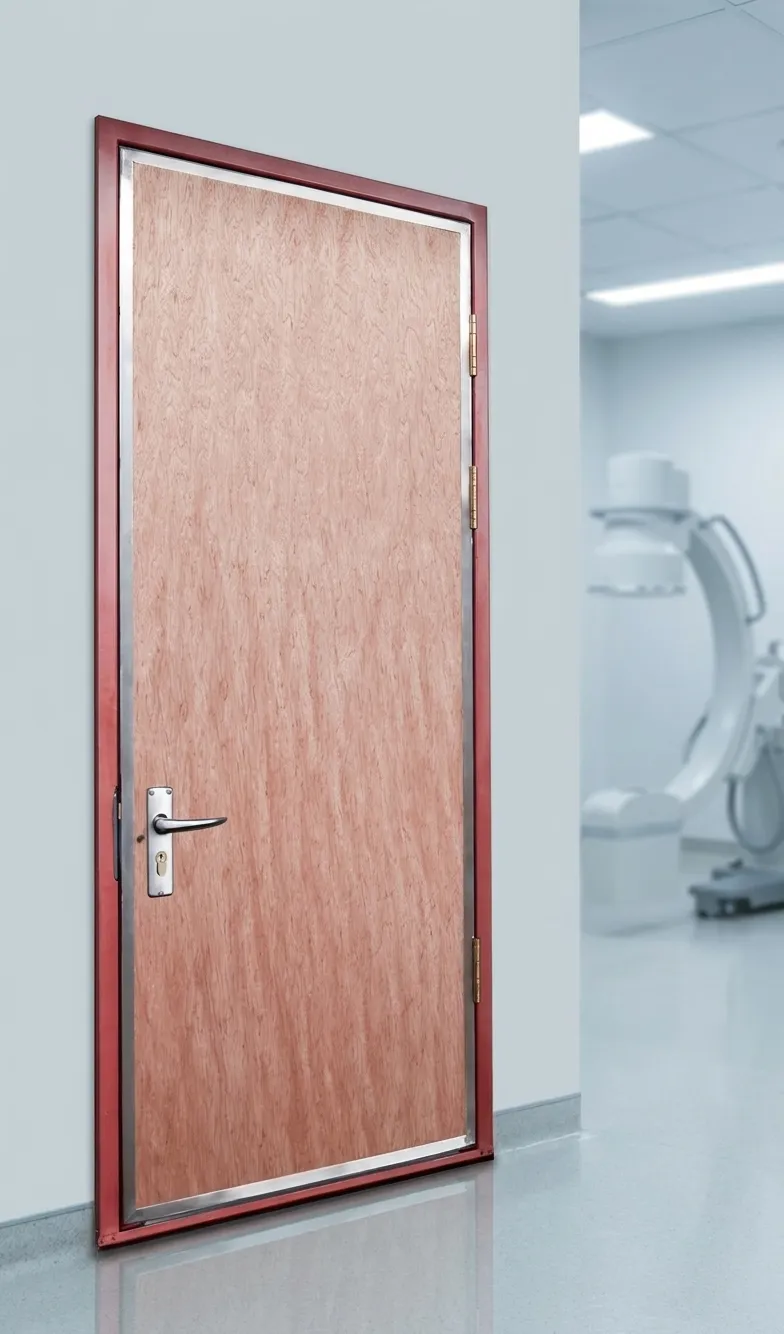
This page covers the healthcare door system itself. For the operational demands of hospital and clinic projects — traffic flow, compliance documentation, working with facilities teams — see Doors for hospitals and clinics.
What is a healthcare door system?
Healthcare environments put three demands on a door that most other buildings don't combine: constant cleaning with harsh chemicals, near-continuous trolley and bed traffic, and in some rooms, a requirement that has nothing to do with wear at all — radiation shielding, or hardware that can't be used for self-harm. A healthcare door system is specified to whichever combination of these applies to the room it serves, not to a single hospital-wide standard.
What healthcare door types does Alpha build?
- Lead-lined doors — hinged and sliding doors with a central lead sheet lining, built for X-ray rooms, CT suites and other diagnostic spaces where radiation shielding is required. See Lead-lined doors.
- Fire-rated healthcare doors — fire compartmentation within hospital buildings, often combined with hygiene-rated facings. See Fire doors.
- Anti-ligature doors for mental health facilities — hardware and door construction specified for mental health and behavioural health environments, where standard fittings present a risk.
What to specify for a healthcare opening
| Consideration | Why it matters |
|---|---|
| Hygiene-rated facing | Withstands repeated chemical cleaning without degrading |
| Impact resistance | Absorbs daily contact from trolleys, beds and equipment |
| Radiation shielding | Required in X-ray, CT and other diagnostic rooms |
| Anti-ligature hardware | Required in mental health and behavioural health facilities |
| Vision panels | Balance supervision needs against patient privacy |
| Wide clear openings | Accommodate beds and equipment through corridors and doorways |
Related products
- Lead-lined doors — radiation-shielded doors for diagnostic imaging rooms
- Fire doors — fire compartmentation within healthcare buildings