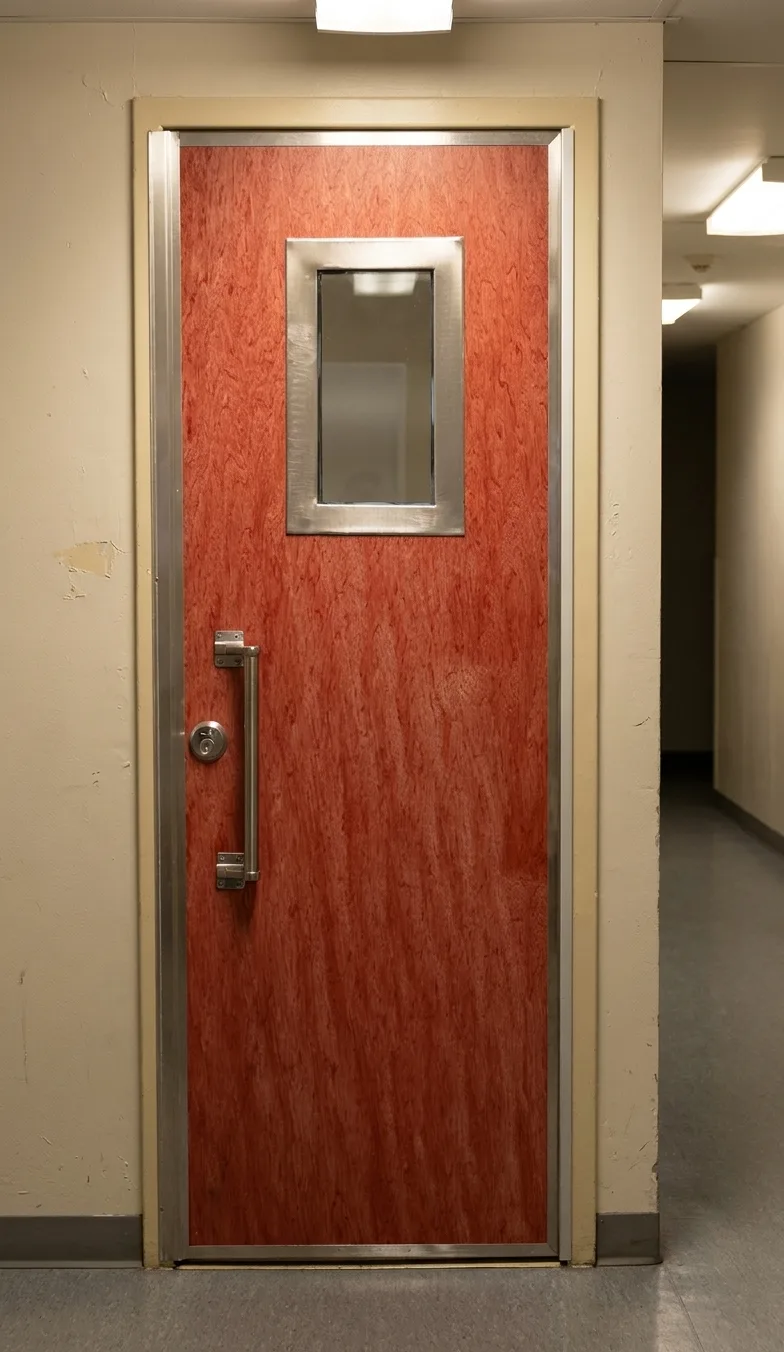
What do industrial sites demand from a door?
- Durability — forklift and equipment traffic, dust and debris, over years of continuous operation.
- Security — control over who accesses plant rooms, stores and restricted areas.
- Environmental exposure — doors installed in unconditioned spaces need to handle temperature swings, moisture and, for electrical infrastructure, controlled ventilation.
- Operational reliability — a door that fails to close properly on a fire compartment, or jams on a frequently used opening, becomes an operational problem, not just a maintenance one.
Which door systems apply
| Requirement | Solution | Product |
|---|---|---|
| Electrical substations and transformer rooms | Security door systems | Transformer room doors |
| Fire compartmentation in plant buildings | Fire-rated door systems | Fire doors |
| Restricted-access stores and control rooms | Security door systems | Security doors |
| Designated escape routes | Fire-rated door systems | Escape doors |
Transformer rooms and electrical infrastructure
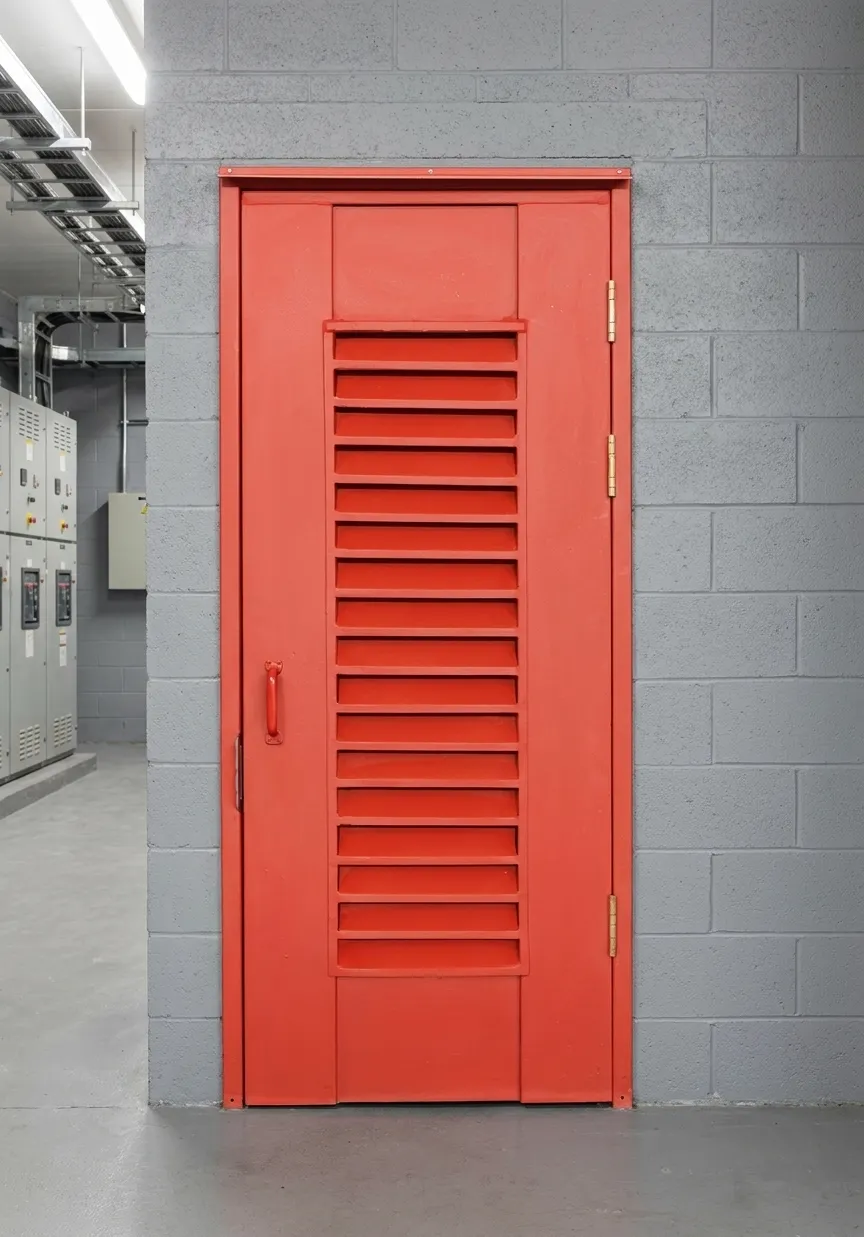
Transformer rooms and substations carry a specific combination of demands: security against unauthorised access, and ventilation to dissipate the heat the equipment generates. Alpha's transformer room doors are built from mild steel with integrated louvre systems and vermin-proof mesh, sized to the airflow the space needs. See Transformer room doors for full construction detail.
Working with Alpha on an industrial project
Industrial projects often involve doors specified against operational risk rather than a single compliance document — access control policy, hazardous area classifications, or equipment manufacturer ventilation requirements. Alpha works from the site's operational requirement, not a generic industrial door spec. See Capabilities for the design and specification support available.